How to Find the Best Thyroid Doctor in Noida Sector 131: Complete 2026 Guide
Looking for a thyroid doctor in Noida Sector 131? Learn symptoms, causes, tests, treatment, diet, and expert care at Ekaksha Healing Center.
If someone in your family suddenly starts gaining weight, feeling tired all day, or becoming unusually anxious, many people assume it is stress. In reality, thyroid imbalance is a common reason behind these symptoms and often gets ignored in the early stage.
If you are searching for a thyroid doctor in Noida Sector 131, this guide gives you a clear and practical roadmap. It explains thyroid disorders in simple language, what tests matter, how treatment works, and when to consult a specialist.
Many patients also search terms like management of thyroid disorders ppt, pharmacological management of thyroid disorders, and thyroid disease management guidelines. This article simplifies those topics in easy clinical language for patients and families.
What is Thyroid Disease?
The thyroid is a small butterfly-shaped gland in the neck. It controls metabolism, energy, temperature regulation, and hormone balance.
Key clinical points:
- Thyroid produces T3 and T4 hormones
- TSH from the pituitary helps regulate thyroid function
- Thyroid health affects weight, mood, heart rate, skin, and menstrual cycle
Main thyroid disorders:
- Hypothyroidism: Low thyroid hormone levels
- Hyperthyroidism: High thyroid hormone levels
Causes
Thyroid disorders can happen due to several causes.
Common causes and triggers
- Autoimmune conditions (Hashimoto’s thyroiditis, Graves’ disease)
- Family history of thyroid disease
- Iodine imbalance (deficiency or excess)
- Pregnancy and postpartum hormonal changes
- Certain medicines (for example, lithium, amiodarone, steroids in some contexts)
- Stress and poor sleep patterns
- Nutritional deficiencies
- Age-related hormonal changes, especially in women
Real-world example
A working professional with poor sleep, irregular meals, and chronic stress may slowly develop fatigue and weight changes. Without testing, symptoms are often misread as “routine weakness.”
Symptoms
Symptoms differ depending on whether thyroid function is low or high.
Early symptoms
- Persistent tiredness
- Weight gain or unexplained weight loss
- Hair fall
- Dry skin
- Mood changes or irritability
- Menstrual irregularity
- Poor concentration
Progressive symptoms
- Neck swelling (goiter)
- Depression or anxiety
- Heart rate changes (too slow or too fast)
- Heat or cold intolerance
- Fertility issues
- Muscle weakness
If progressive symptoms appear, do not delay thyroid testing.
Main Solution: Step-by-Step Action Plan
Step 1: Confirm diagnosis with proper tests
Basic thyroid evaluation usually includes:
- TSH
- Free T4
- T3 (if clinically needed)
Additional tests in selected patients:
- Anti-TPO antibodies
- Thyroid ultrasound
- CBC, vitamin D, B12, ferritin based on symptoms
Why it matters:
Accurate diagnosis prevents wrong treatment and unnecessary supplementation.
Step 2: Start treatment under medical supervision
For hypothyroidism:
- Thyroid hormone replacement is commonly prescribed
- Dose is individualized by age, weight, symptoms, and test values
For hyperthyroidism:
- Anti-thyroid medication, symptomatic treatment, or specialist endocrine plan may be used
Why it matters:
Self-medication or dose changes can worsen symptoms significantly.
Step 3: Follow medicine timing correctly
If prescribed thyroid hormone:
- Take on an empty stomach
- Keep timing consistent daily
- Avoid immediate intake with calcium/iron supplements
Why it matters:
Absorption changes can alter treatment response.
Step 4: Track symptoms and lab trends
Monitor:
- Energy levels
- Sleep quality
- Weight trend
- Hair and skin changes
- Menstrual pattern
Retesting frequency:
- Often every 6 to 12 weeks after dose change
- Then periodic maintenance as advised
Why it matters:
Treatment is dynamic. Symptoms and lab values must be reviewed together.
Step 5: Build thyroid-supportive nutrition
Include:
- Balanced protein in each meal
- Seasonal vegetables and fruits
- Whole grains in controlled portions
- Iodized salt in normal household amounts
- Zinc/selenium-rich foods (nuts, seeds, legumes, eggs)
Why it matters:
Good nutrition supports overall hormonal and metabolic recovery.
Step 6: Improve sleep and stress control
Action:
- 7 to 8 hours sleep
- Fixed sleep schedule
- Daily breathing/yoga/walking
Why it matters:
Chronic stress worsens fatigue, mood, and thyroid symptom burden.
Step 7: Maintain activity and weight discipline
Action:
- 30 to 45 minutes activity most days
- Strength + mobility 2 to 3 days weekly
Why it matters:
Regular movement improves metabolism, mood, and body composition.
Step 8: Schedule regular doctor follow-up
Action:
- Visit your thyroid doctor every 3 to 6 months (or as advised)
- Carry symptom log and reports
Why it matters:
Thyroid levels can shift over time due to lifestyle, age, stress, and other illnesses.
Home Remedies / Natural Support (Support Only)
Supportive practices:
- Hydration
- Consistent sleep
- Balanced iodized salt use
- Anti-inflammatory meal pattern
- Ashwagandha or supplements only after medical advice
What not to do:
- Do not stop prescribed medicines
- Do not rely only on social media remedies
- Do not delay lab follow-up
Indian-Friendly Diet Plan
Morning
- Warm water
- Oats, vegetable poha, or besan chilla
- Eggs/paneer/curd
Midday
- Roti + dal + sabzi + salad
- Curd or buttermilk if tolerated
Evening
- Roasted chana/sprouts/nuts
- Unsweetened tea
Dinner
- Light sabzi + protein + controlled carbs
- Early dinner preferred
Thyroid diet tips
- Keep protein in every meal
- Avoid long fasting and binge eating cycles
- Use a practical, sustainable plate model
Foods to Avoid or Limit
- Deep-fried foods
- Ultra-processed snacks
- Sugary drinks
- Frequent refined flour foods
- Excess caffeine
- High sugar desserts
Note: Moderate soy intake is usually acceptable for many people, but discuss timing if on thyroid medication.
Lifestyle Modifications
- Fix sleep routine
- Manage stress daily
- Avoid smoking and limit alcohol
- Maintain healthy weight
- Walk after meals
- Keep regular thyroid checkups
Complications if Ignored
Uncontrolled thyroid disease may lead to:
- Persistent fatigue and poor quality of life
- Menstrual and fertility issues
- Mood disorders (anxiety/depression)
- Cardiac rhythm problems (especially in hyperthyroidism)
- Cholesterol and metabolic issues (especially in hypothyroidism)
- Pregnancy-related risks if not monitored
Early and consistent treatment prevents most long-term issues.
When to See a Doctor
Consult a specialist if:
- Symptoms persist for weeks
- Sudden unexplained weight change occurs
- Hair fall worsens
- Irregular periods continue
- Anxiety/palpitations increase
- Neck swelling appears
For expert diagnosis and personalized treatment, consult Ekaksha Healing Center in Sector 131 Noida.
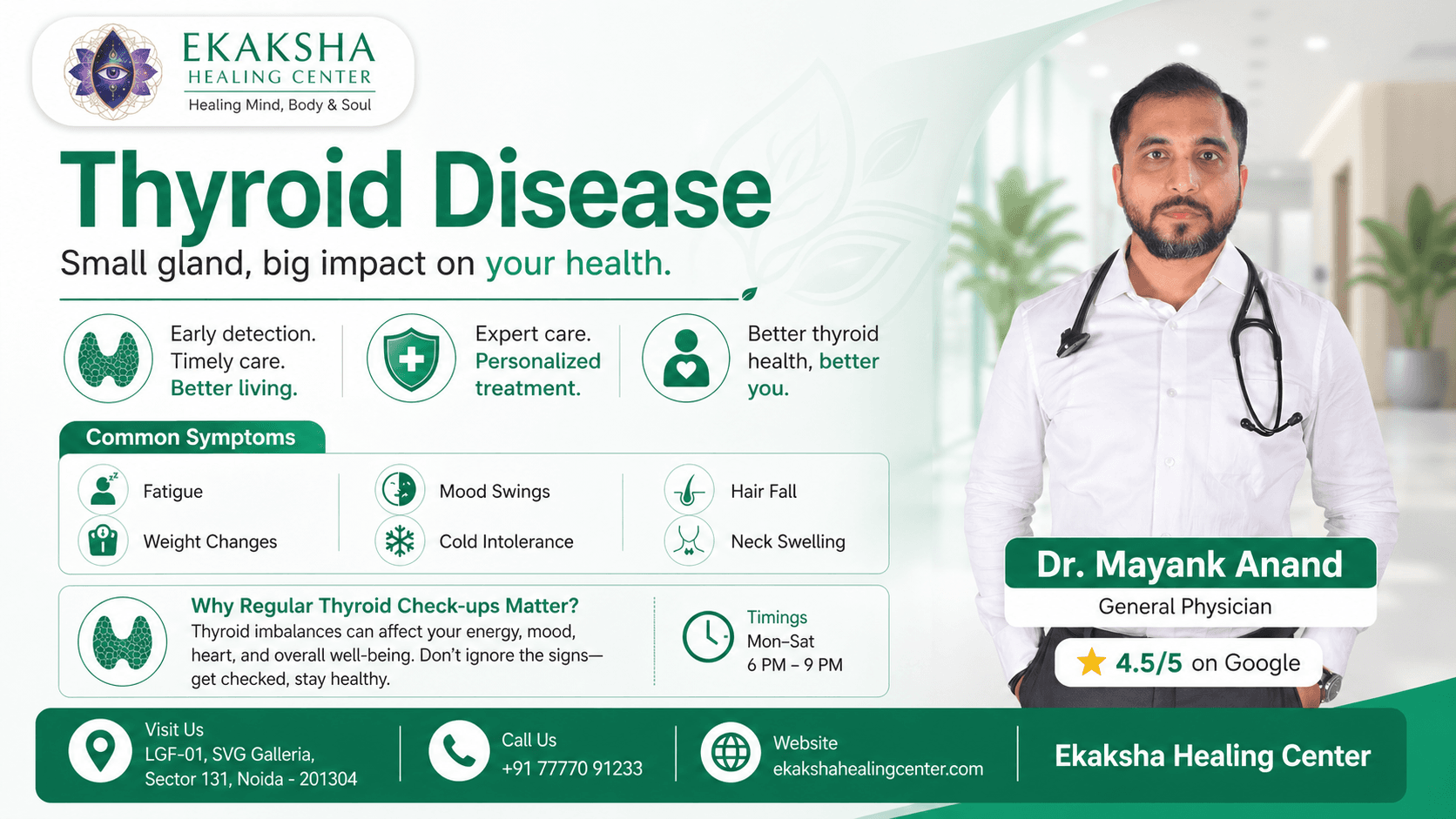
If you are looking for the best doctor in Noida for thyroid care, Dr. Mayank Anand provides practical thyroid management at Ekaksha Healing Center, a trusted clinic in Sector 131 Noida.
People Also Ask
What are early symptoms of thyroid problems?
Fatigue, weight changes, hair fall, dry skin, and mood changes are common early signs.
Can thyroid disease be cured permanently?
Most thyroid disorders are controlled long-term, not “instantly cured.” Regular follow-up is important.
Which doctor should I consult for thyroid issues?
An endocrinologist or experienced physician managing thyroid disorders can evaluate and treat appropriately.
How often should thyroid tests be repeated?
Usually every few months during adjustment, then periodic follow-up as advised by your doctor.
Can diet alone fix thyroid disease?
Diet helps symptom management and recovery but does not replace prescribed medical treatment.
Is thyroid disease common in women?
Yes, thyroid disorders are more common in women, especially around pregnancy and midlife hormonal transitions.
Keyword-Based Patient Queries (Explained Simply)
management of thyroid disorders ppt
If you are searching this term for quick understanding, focus on 5 essentials: diagnosis with TSH/T3/T4, correct medicine dose, regular follow-up testing, diet and sleep correction, and long-term monitoring.
pharmacological management of thyroid disorders
This means medicine-based treatment. For hypothyroidism, thyroid hormone replacement is commonly used. For hyperthyroidism, anti-thyroid medicines or specialist endocrine options are selected based on case severity.
thyroid disease management guidelines
Most guideline-based care includes accurate diagnosis, symptom correlation, evidence-based medicines, periodic thyroid profile testing, and dose adjustment rather than one fixed lifelong dose.
treatment of thyroid in female
Women need individualized treatment because thyroid health may be affected by menstrual cycle changes, fertility planning, pregnancy, and postpartum hormonal shifts.
thyroid symptoms in female
Common symptoms in women include fatigue, hair fall, weight fluctuation, mood changes, menstrual irregularity, poor concentration, and cold/heat sensitivity.
19 signs of thyroid problems
Patients often search this phrase to check symptom lists. Instead of counting signs only, prioritize clinically meaningful patterns such as persistent fatigue, weight change, hair fall, neck swelling, palpitations, menstrual disturbance, and mood change with confirmatory blood tests.
treatment for thyroid
The best treatment for thyroid depends on diagnosis type, lab reports, age, symptoms, and comorbidities. Self-treatment is risky; doctor-guided dosing is essential.
pharmacotherapy of thyroid disorders slideshare
This query usually indicates a search for medicine-focused educational material. In practical care, pharmacotherapy must always be personalized and adjusted with repeat thyroid profile results.
Internal Linking Suggestions
- Read: Best Diabetes Treatment in Noida
- Learn: Hormone and Metabolic Health Guide
- Read: Weight Gain Causes and Treatment
- Learn: Thyroid Diet Plan India
Conclusion
Thyroid disorders are common, manageable, and highly treatable when diagnosed early. Ignoring symptoms can delay recovery and increase long-term health burden.
If you notice persistent fatigue, weight change, mood shifts, or hair fall, consult a reliable thyroid doctor in Noida Sector 131 for accurate diagnosis and personalized care.
At Ekaksha Healing Center, we prioritize your health and well-being. If you have any concerns regarding this topic, consult Dr. Mayank Anand for expert guidance.
Frequently Asked Questions
Thyroid disease happens when the thyroid gland produces too little or too much hormone, affecting metabolism, energy, and multiple body functions.
Need a consultation?
Get expert medical advice for your health concerns at Ekaksha Healing Center.
Book Appointment